Wednesday, June 30, 2021

So you want to write a MALAS thesis! Episode 4, the paperwork…

So you want to write a MALAS thesis!   Episode 4, the paperwork…

Katelyn May, MALAS Alum
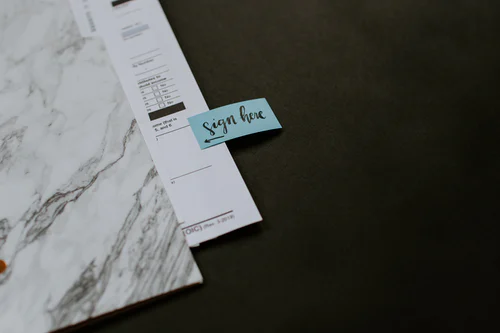


You’ve heard me mention Graduate Affairs a few times now, and you might be thinking, “sounds ominous.” As much as Grad Affairs tends to be stricter on policies and procedures, don’t let yourself get psyched out. Coordinating with them is just another part of the process, and while it won’t be as much fun as researching and writing, it’s still important. Unless you’re like me who had avoided Grad Affairs for a year because they seemed scary...I was rather unprepared for the technical side of the thesis process, and I would love to spare you my same mistakes. 


First of all, nail down exactly what Grad Affairs needs from you ASAP. I decided to switch from the exam to the thesis option late in the game, and had to file a petition to enroll in 799A (the thesis course standard university-wide). It was a pain. Spare yourself. Get the paperwork done early. Depending on what kind of research you will be doing, you may have to fill out either the Institutional Review Board (IRB) or Institutional Animal Care and Use Committee (IACUC) forms. These apply to research conducted on human or animal subjects respectively. Be warned! Grad Affairs may take 4-6 weeks to review your IRB proposal (I told you to start early, remember!). 


If your research doesn’t fall into one of these categories, great! You can now start completing your thesis committee form. Let’s break this down into 9 easy steps: 


  1. Choose your thesis Chair! Which super-cool professor will you give the honor of supervising your epic work? Whoever it is, they will be chosen in conjunction with your Graduate Advisor (aka Bill). And just an FYI, Bill is also a great option for Chair. Once you’ve got a Chair locked in, work together with them and Bill to build the remainder of your awesome committee team.

  2. Have all members of your committee sign the thesis committee form. Your thesis Chair and Bill will give the final seal of approval with their signature(s). 

  3. If you’d like someone to serve on your committee that fits most of the criteria but doesn’t have an SDSU affiliation, now is the time to get any additional documents you might need to petition Grad Affairs to allow them to serve on your committee. 

  4. If your dope research requires either IRB or IACUC paperwork to be reviewed, do that now. 

  5. Multilingual and want to write your thesis in a language other than English? Go for it! Make sure that all faculty members in your committee are fluent in whatever language you’re working in. Still, Bill will have to verify your competency in standard written English before you can start. 

  6. Complete the "Rights To Thesis Data And Publication Authorship" page of the thesis committee form. 

  7. Turn in all your completed forms and any additional docs to Graduate Affairs. You can find their headquarters in Student Services East (SSE) 1410. 

  8. Get approved! It can take up to one week to get email verification of approval. Registration info for the thesis course 799A will also be sent to you. 

  9. Celebrate the completion of these definitely-not-boring forms and the official start of the writing process!





Friday, June 25, 2021

So you want to write a MALAS thesis! Episode 3, the committee…

So you want to write a MALAS thesis!  Episode 3, the committee…

Katelyn May


Your thesis committee is a crucial element of the entire thesis process and must be completed in accordance with SDSU’s guidelines. This is where things become much more technical with stricter rules and dates to abide by. But don’t worry, I’m here to walk you through it. 


So what is a committee and why do you need it? Your committee is a minimum group of 3 advisors who will oversee your research and ultimately formally approve your thesis for consideration by the university. You are free to choose your own committee members, though they do have to meet certain criteria. Let’s break this down: 


First and most importantly is your committee Chair. This person will have the most impact on your progression through your thesis. Graduate Affairs requires that the Chair be either a tenured or tenure-track faculty from your home department. For us, that would mean MALAS. Which is great, because MALAS professors spread all across campus with so many different fields to choose from. 


Your second committee member must also be a tenure/tenure-track professor OR professor emeritus, FERP, adjunct professor, or lecturer. Still, this person must be from your home department as well. 


Your third committee member may also be a tenure/tenure-track professor OR professor emeritus, FERP, adjunct professor, or lecturer, however they must be affiliated outside of your home department. As a MALAS student this might get a little confusing because the program involves such a wide variety of faculty. Don’t worry too much about this, I’d suggest choosing someone who is familiar with your area of research who will challenge you to produce your best analysis. Maybe think outside the box a bit on this one, perhaps in a field you might not have considered. If you get stuck here, I recommend asking Bill for suggestions. I found my third committee member just by asking around and ended up working with an awesome professor from the Television and Film department that I hadn’t actually worked with prior. 


You may also have additional committee members who can meet any of the above criteria. If you’re even a little bit confused or worried your choices might not get approved, ask as soon as possible so that you don’t fall behind. Like I said, we’re getting into the technicalities of the thesis writing process, and while there is still a lot of room for you to bring your own ideas and creativity to this step, there are specificities that have to be followed. Just don’t let it scare you, ask too many questions, and you’ll get through it easy-peasy. 


Just make sure that for everyone serving on your committee, their areas of expertise complement your area of focus. For example, my thesis focused on film and philosophy, so it wouldn’t make much sense for me to ask, say, a hotel and tourism professor to serve on my committee. But like I said, MALAS encourages curiosity and dipping into any field that interests you, so there is a lot of flexibility here. Grad Affairs will definitely let you know if your committee selection isn’t up to their standards. In fact, the Dean of Grad Affairs will have to OK your final committee members. 


More info to come on what to expect from Grad Affairs, what they expect from you, and how to complete all the necessary paperwork!


Thursday, June 24, 2021

Peruse Recent and Past Masters Theses by MALAS Graduate Students!

Friday, June 18, 2021

So you want to write a MALAS thesis! Episode 2, the writing…

So you want to write a MALAS thesis!  Episode 2, the writing…

Katelyn May, MALAS Alum


Now that you have a basic understanding of what the MALAS thesis is and how to get started, let’s go into detail on how exactly to write the dang thing. Where will you draw inspiration from? What could qualify as an acceptable topic for your thesis? How much time will it take you to craft your masterpiece? Fear not, for all this and more will be answered!


To begin, really take a moment to appreciate the fact that you’re in such an awesome graduate program like MALAS that not only allows but actively encourages you to explore any and every area of research you might be curious about. When I first considered grad school, I thought I would go for an M.A. in English to follow up my B.A. in the same subject. But then I thought about how limiting that would be for me, someone who had minored in Film and wanted to continue exploring that field. MALAS allowed me to do that, and my thesis was an epic amalgamation of my different areas of interest. For me, the thesis was about bringing together my research of culturally significant films through a cinematography lens, whereas other MALAS alums have written amazing pieces on pretty much anything you can imagine: Japanese technology, Vincent Van Gogh, or even garbage in America. 


Whatever you choose to write about, your thesis needs to be culturally insightful, using your topic to make a claim or argument substantiated by significant research. This step can be tricky, as a lot of us aren’t used to the kind of long-form essay writing necessary for the thesis. You will need to develop, support, and defend your ideas throughout the entirety of your writing, which will range somewhere between 50-65 pages. This is where I hit a bit of a snag early on in my writing process. The first rough draft I brought to my committee chair (we’ll talk about committees in another post) was little more than 3 separate essays loosely tied together by the fact that they were all film analyses. Beyond that, I didn’t have much to link the essays to one another, and that definitely wasn’t going to cut it. But it was a solid foundation to work off of. Don’t be afraid to bring in older work and research you’ve done, but don’t think it’s finished either as it is. The thesis requires a lot of editing, revision, cutting, and pasting to make one cohesive final product with a central theme weaved throughout. Without this core concept, your thesis will be little more than a collection of papers. 


Okay, got a little heavy there...In all honesty, don’t be scared if you start writing and editing only to find that what you thought would be the crux of your thesis has started to crumble a little bit. This is okay! It’s all part of the process. Let your ideas change as you write, and go to others for help and input. 


So how long should this whole process take? Well, really it’s up to you, but all I would say is don’t rush it. I graduated a semester early, and in hindsight I feel like I pushed through my thesis rather than taking the time to enjoy the process. Don’t be like me. Take your time and take it in. 


Like I said in my last post, you generally start the thesis process after you have finished 27 units of your program of study. This will typically put you at the start of your 4th semester of the program where you don’t have any other classes to distract you and you can spend the entire semester focused on your thesis. This isn’t a hard-and-fast rule though. Some people (i.e. me) choose to write their thesis during their 3rd semester in conjunction with other classes. Others might choose to write their thesis later, in a summer session or into the next year. Really, the amount of time you take is more up to you and what you’re able to handle, but I would say more often than not people finish by the end of the semester in which they started writing. 


Now, getting your thesis reviewed and published is a totally different beast, and there are stricter deadlines for this part of the process that you’ll have to meet, especially if you’re looking to graduate at a particular time. Again, we’ll cover this later. But for now, I hope you have a better idea of what writing your MALAS thesis will be like, the aspects your thesis will have, and how much fun it will be to write. 


Friday, June 11, 2021

So You Want to Write a MALAS Thesis! Episode 1, the Basics …

So You Want to Write a MALAS Thesis!  Episode 1, the Basics …
Katelyn May, MALAS Alum


You’re writing a Master’s thesis, congrats! There are a few options when it comes to completing your MALAS Program of Study (POS): you can take a comprehensive exam, complete a project, or write a thesis (the coolest option). This happens after you have finished 27 units, or 9 classes, of study and you’re totally and completely prepared to tackle this definitely-not-intimidating capstone paper!


...Okay, so it can definitely be intimidating, but that’s where this handy-dandy guide will help you know what to expect from the MALAS thesis process. I’ve been there, and trust me, it’s really an incredibly rewarding experience. 


Like I mentioned, the first real step is to decide to write a thesis to complete your POS to begin with. A lot of cohort members will choose to take the exam, which is also a great option and may suit you better depending on what exactly you personally would like to achieve from your time in MALAS. Full disclosure, I was intending to take this option originally. It wasn’t until an essay I had written for another MALAS course was accepted into an international conference that I began to really enjoy writing again. As a former English major who’d become somewhat disconnected from my love of writing, I’d had a new-found sense of pride in my work, and a thesis was the perfect way to showcase that. 


And by the way, I encourage you to take full advantage of academic conferences. They’re excellent opportunities to network, share your work, get published, and even win some cash. MALAS can even help fund your journey like it did for me, expanding your culture-craving consciousness beyond the classroom. 


So what exactly is this thesis thing anyway? The MALAS thesis is an extended and extensive piece of writing, generally somewhere between 50-80 pages long that showcases your talents as a student of culture. Let your curiosity guide you and search for inspiration in unlikely places as you begin to brainstorm topics for this epic text. Don’t discount anything, and whenever you’re unsure or afraid you might be veering into unstable territory where none of your ideas seem to align, the solution is simple...ask for help! One of the biggest differences I noticed from undergrad to grad school was that the professors you work with are always there to help and guide you, but they won’t hold your hand. As a Master’s student, you have to take responsibility for your own progress and take the initiative to find the best friends and mentors for your own goals. Luckily for you, you chose MALAS, which unbiasedly has the best and coolest profs around. For instance, the idea to write a thesis didn’t actually come from me, but from a friendly, almost off-handed suggestion from one of my mentors as I sat in their office one day talking through one of my essays. 


“It sounds like you have a solid basis for a thesis already,” they said. I did? It hadn’t really even crossed my mind. Could the multiple essays I’d written, revised, and studied so much over the last few semesters really become one cohesive thesis? (Spoiler alert: the answer is yes). 


The point is, approaching the MALAS thesis can be daunting, but you aren’t alone, and you shouldn’t approach it that way either. Ultimately it is your own work (and it’s going to be so awesome when it’s finished), but you’ll have so much great support along the way if you’re willing to ask for it. 


You’ve decided to write a thesis, and there’s still a lot to go over before you’ll get to hold that sweet finished product in your hands (which is one of the most rewarding feelings ever), but you’re off to a great start. Understanding that this is an extensive, long-form, and cohesive piece of literary research is an important place to start, and now it’s time to begin brainstorming ideas and drawing upon inspiration. MALAS is awesomely unique in that it allows you to pull from any area of interest, so let loose and follow whatever threads lead you to exciting concepts you know you’ll be able to sustain throughout your entire thesis. Reigning in and refining those ideas will come later in the writing and editing phases, followed finally by the publishing phase in which your final thesis will be presented to SDSU’s own Montezuma Publishing for, you guessed it, publishing. You must have your thesis approved by both your chosen committee and Montezuma Publishing to successfully complete your thesis course and receive credit. 


“Committee? Montezuma Publishing?” I hear you saying. Don’t worry, I’m getting ahead of myself, and we’ll dive deeper into those in a later post; this is after all just the basics! And the fun is just beginning…


So, are you ready to begin?


Thursday, June 3, 2021

New Fall 2021 MALAS Seminar! MALAS-600A / Women’s Studies 611 Gender and Diaspora with Professor Anh Hua

MALAS-600A / Women’s Studies 611 
Gender & Diaspora 
Professor Anh Hua 
Fall 2021, synchronous online 
Section 02 | Schedule # 22275 | Units 3.0 
Session FALL  
Seminar 1600-1840, Tuesdays


Diaspora Studies examine the dispersions of populations and cultures across various geographical places and spaces. This discipline is emerging as a cutting-edge area of research alongside studies on transnationalism, globalization, nationalism, and postcoloniality. Diaspora is one of the most debated terms today, especially within scholarly discussions about migration, displacement, identities, community, global movements, and cultural politics.  


In this graduate course “Gender and Diaspora,” we will explore the historical and interdisciplinary perspectives on gendered impact of forcible migration, such as African, Jewish, Asian and other diasporas. We will analyze the scholarly debates concerning gendered experiences of diaspora on political identities, social movements, and cultural production. Some of the themes we will explore include: characteristics and types of diasporas; the relation between feminism and diasporas; issues of gender, sexuality, ethnicity, and identities in diasporas; forced migration, the history of slavery, Holocaust and other genocides; media and digital diasporas; rites of return; homeland and nostalgia; exile and displacement; diaspora poetics and politics of memory; diasporic art and cultural productions; diasporic women’s writing and film; and the future of diasporic imaginings.


Wednesday, May 26, 2021

New Fall 2021 MALAS Seminar! Europe and Terrorism With Professor Veronica Shapovalov


Europe and Terrorism

MALAS 600C /European Studies 501  | T 16:00-18:40   GMCS  307   

Professor Veronica Shapovalov  

In this course we shall explore the complex historical, cultural, and moral dimensions of terrorism—one of the central political and moral issues of the 21st century.  How did “modern” terrorism evolve in Europe? Why has terrorism become the growing problem in Europe? What is the role of European governments in controlling terrorism? What can the artists’ insights in terrorism teach us about both the concept of terror and the reality of terrorists’ attacks?  How do the unimaginable become reality?    

Together we shall explore and analyze  

* extremist ideologies and religious intolerance in the European cultural context 

* many kinds of terrorism that has been existing in Europe 

* the morality of political violence in general and terrorists’ violence in particular 

* the issues of gender and terrorism 

*  complexity of ideological and cultural dimensions of terrorism   

I hope to keep lecturing to a minimum.   Class discussion is the heart of this course. 


Professor Veronica Shapovalov, Department of European Studies    

Professor Veronica Shapovalov teaches at the Department of European Studies in the European Studies and Russian Programs.  I earned my diploma in Germanic Philology from St. Petersburg State University, M. A. in English Literature from University of Illinois, Springfield, and Ph.D. in Slavic Studies from University of Illinois, Champaign-Urbana.  In Russia I studied at the State Hermitage Museum in St. Petersburg. I have been teaching at SDSU for more than 30 years.  My field of research is ego-documents--autobiographies, memoirs, letters, journals--of women prisoners of Soviet labor camps and prisons, of women who were deported in 1941 from the Baltics to Siberia and memoirs of children whose parents were arrested as enemies of the people in the Soviet Union in 1930s. Ego documents make you look at historical and political events through the eyes of witnesses, victims, even perpetrators. That is why Europe and Terrorism is one of my favorite courses.  In this course we’ll look at the acts of terror through the eyes of perpetrators and their relatives, bystanders, victims, historians and political analysts. I worked in the archives of Memorial—the organization that collects and preserves documents related to political repressions in the Soviet Union.  The result of my work is a book Remembering the Darkness: Women in Soviet Prisons. I did extensive research on violence against women in the Soviet labor camps (“Sestrenki, mamki, damki: zhenshchiny i  nasilie v GULAGe (Sisters, Moms, Broads: Women and Violence in the GULAG) and several other articles. I am the editorial board member of the journal Gulag Studies.       

MALAS Fall 2021 Seminar! The Rhetoric of Visual Composing with Professor Jennifer Sheppard!

Rhetoric of Visual Composing 

MALAS 600D/RWS 543, Professor Jennie Sheppard


Visual messages are a powerful way to inform, persuade, and educate. Within professional settings, the ability to communicate effectively with supervisors, co-workers, clients, and public audiences through a combination of visual, textual, and spatial elements is an invaluable skill. This course takes a rhetorical and professionally-oriented approach to analyzing, organizing, and communicating ideas through visual and multimodal means. Course readings will draw on scholarship in visual rhetoric and information design. Research and practitioner materials will be used as a basis for evaluating the rhetorical choices in the visual communication work of others and for learning how to apply these concepts to visual composing projects such as infographics, visual branding, and texts for workplace and educational contexts. The focus throughout the course will be on learning to evaluate and craft texts that integrate effective visual strategies to create informative, persuasive, and user-friendly texts. No prior design experience is required.


Dr. Sheppard has been a faculty member in the Rhetoric and Writing Studies Department at San Diego State University since 2014. Her research focuses on digital writing, visual and multimodal rhetoric, and professional communication. Her work has appeared in Computers and Composition, Journal of Literacy and Technology, Hybrid Pedagogy, and several edited collections, including Designing Texts: Teaching Visual Communication. She is also co-author of Writer/Designer: A Guide to Making Multimodal Projects. Dr. Sheppard is the 2019 recipient of the SDSU College of Arts and Letters Excellence in Teaching Award.


Friday, May 21, 2021

New Fall 2021 MALAS Seminar! New MALAS-Associated Faculty! Professor Consuelo Salas's DECOLONIAL RHETORICS

DECOLONIAL RHETORICS

Professor Consuelo Salas

MALAS-600D   02 22280 DECOLONIAL RHETORICS 3.0 Seminar 1530-1810 TH SH-320  C. SALAS

RWS-596   01 23505 DECOLONIAL RHETORICS 3.0 Lecture 1530-1810 TH SH-320  C. SALAS  30/30


In this course students will be introduced to theories and practices of decolonial rhetoric to critically think about key theoretical debates in decolonial theory and the convergence of this movement into the field of rhetoric and composition. The body of work of decolonial rhetoric is very large. Thus, this course will be neither comprehensive nor exhaustive. Instead, this course will provide a brief introduction to decolonial theory and then move on to the original intersections of rhetoric and postcolonial theory and then the eventual move to rhetoric and decolonial theory. 


Concentrating on literacy, story, and composing the course will then explore applications of decolonial rhetorics in the areas of Indigenous rhetoric and Latina/o rhetorics. All the readings have been chosen carefully, centering Latina/o and Indigenous to North American rhetorical scholarship.


Consuelo Salas is an Assistant Professor of Border Rhetorics. As a visual rhetorician and a food studies scholar, her areas of interest include commodification and representations of Mexican and Mexican Americans to U.S. based audiences within “food spaces.” Her areas of interest also include foodways rhetoric, the scholarship of teaching and learning, information literacy, and the intersections of translanguaging and monolingual technological interfaces. Dr. Salas is at work on a book that critically explores images associated with the cultural imaginary of Mexico and their relationship to food and identity. Dr. Salas' co-edited collection Latin@s’ Presence in the Food Industry: Changing How We Think About Food, published with University of Arkansas Press, was awarded the Gourmand World Cookbook third best in the world in the category of Professionals in 2017. Her work can also be found in edited collections, such as Visual Imagery, Metadata, and Multimodal Literacies Across the Curriculum, Food Feminism and Rhetoric, as well as in peer reviewed journals, such as the Community Literacy Journal.  

Tuesday, May 18, 2021

Our Popular MALAS Seminar, Open to All SDSU Graduate Students is Back for Fall 2021!!! Star Trek, Culture, and History, with Professor John Putman, Rides Again, Boldly Going Where No ... (You Know the Rest!)

MALAS 600B/History 537
Star Trek, Culture, and History
Dr. John Putman
Office: AL 557 | Phone: (619)594-4888 
Email: putman@sdsu.edu
MW 2 to 3:15pm


Star Trek, Culture, and History explores the cultural phenomenon known as Star Trek.  By reading critical academic studies of Star Trek and analyzing numerous episodes viewed in class, this course will address how Star Trek—its seven television series, thirteen movies, three animated series, and more than a thousand novels--reflected historical events, forces, and ideas from 1960s to the early 21st century. In particular we will investigate the relationship between the several television series and the larger historical and cultural context in which they took place. The course will also explore how Star Trek addressed important contemporary social and cultural issues, ranging from race and gender to sexuality and politics.


John Putman
 

John Putman (Professor, University of California, San Diego, 2000) is a historian of the modern American West (late 19th and 20th centuries), particularly California and the Pacific coast states. His recent research emphasizes class and gender politics in the urban Northwest. His book Class and Gender Politics in Progressive-Era Seattle was published in 2008 by University of Nevada Press. His other publications include "’A Test of Chiffon Politics’: Gender Politics in Seattle, 1897-1917," Pacific Historical Review (November 2000) and “Racism and Temperance: The Politics of Class and Gender in Late 19th-Century Seattle,” Pacific Northwest Quarterly (Spring 2004). Professor Putman’s current project is a comparative analysis of early 20th-century Pacific Coast expositions. He is also interested in the cultural history of the 20th century United States, in particular, science fiction and Cold War films, and the social and cultural meaning of Star Trek. His courses include the California History, the History of the American West, US History since 1945, Constitutional History of the United States and Star Trek, Culture, and History.  Professor Putman has a forthcoming chapter entitled, "Terrorizing Space: Star Trek, Terrorism, and History" in Star Trek and History(Wiley, April 2013) to correspond with the release of next Star Trek movie.

New MALAS Fall 2021 Seminar with Andy Warhol Curatorial Fellow, Professor Kim Stringfellow: ART 596/MALAS 600D - Art, Environment, and Place

MALAS 600D/ART 596 
Art, Environment, and Place   
Fall 2021 T/TT 2 to 3:15 pm  
Professor Kim Stringfellow


Art, Environment, and Place is a hybrid (mostly online instruction) upper-division undergraduate/ graduate seminar exploring the convergence of interdisciplinary art practice, field-based creative research and environmental studies through focused writing, readings, discussions, and presentations that demonstrate how important environmental issues, ecological concerns, and sustainable design practices are incorporated into the work of contemporary artists and designers.


Detailed Course Description
Innovative approaches to form and content are evolving in contemporary art practice that transcends traditional boundaries of art-making. Many artists are integrating various field research strategies borrowed from the natural sciences, geography, and other disciplines to create rich transdisciplinary works of art. Offering a critical examination of place, many of these projects focus on regional histories, Indigenous perspectives, environmental issues and ecological concerns including climate change and environmental justice. Some practitioners incorporate sustainable design into their work or propose actual remediation to ecologically challenged sites. Other practitioners offer activist perspectives or are research-driven, implementing tools of documentarians and journalists—using photography, video, audio writing—and often work collaboratively. The interdisciplinary nature of these artworks encourages a diverse and varied audience.


This is a transdisciplinary course and does not require art-specific training. However, creative thinking is required. Course activities center on readings, discussions, presentations, and film screenings. Writing and group discussion are primary activities for this course. Students, working in collaborative groups, are required to post written responses to assigned readings in the discussion forum every week. Projects include an artist research presentation. A final project thesis paper and presentation will be due at the end of the semester.

Kim Stringfellow

Kim Stringfellow is an artist, educator, writer, and independent curator based in Joshua Tree, California. She is a professor at San Diego State University’s School of Art + Design. She received her MFA in Art and Technology from the School of the Art Institute of Chicago in 2000. Claremont Graduate University awarded her an honorary doctoral degree in 2018.

For the past twenty years, Stringfellow’s creative practice has focused on the human-driven transformation of some of the American West’s most iconic arid regions through multi-year, research-based projects merging cultural geography, public practice, and experimental documentary into creative, socially engaged transmedia experiences. These art-centered projects combine writing, photography, audio, video, installation, mapping, and community engagement to collectively explore the history of place while also examining how the landscapes we inhabit are socially and culturally constructed. In particular, she is interested in the ecological repercussions of human presence and occupation within these spaces. By focusing on distinct subjects, communities or regions she attempts to foster a discussion of complex, interrelated issues for each site while exposing human values and political agendas that form our collective understanding of these places.

Stringfellow’s projects have been commissioned and funded by leading organizations including California Humanities, Creative Work Fund, Graham Foundation for Advanced Studies in the Fine Arts, Los Angeles County Arts Commission, and the Seattle Arts Commission. She is a 2016 Andy Warhol Foundation for the Visual Arts Curatorial Fellow and a 2015 Guggenheim Fellow in Photography. In 2012, she became the second recipient of the Theo Westenberger Award for Artistic Excellence. The award honors the achievements of contemporary women who work in photography, film, and new media transforms how we see the American West. To coincide with her receiving this award, Jackrabbit Homestead was exhibited at the Autry National Center’s Irene Helen Jones Parks Gallery of Art from September 13, 2014 – August 23, 2015. Other awards include a Center for Cultural Innovation (CCI) “Investing in Artists” equipment grant in 2010.


Kim Stringfellow
www.kimstringfellow.com
www.mojaveproject.org
Andy Warhol Foundation Curatorial Fellow
2015 Guggenheim Fellow in Photography
Honorary PhD, Claremont University
Professor, School of Art + Design
San Diego State University