
Wednesday, September 11, 2019


Thursday, August 8, 2019
New MALAS Seminar, Fall 2019, with Raechel Dumas, Associate Professor of Classics & Humanities, SDSU | Animal Humanities #animalhumanities
Animal Humanities
MALAS 600B or HUM 580
Dr. Raechel Dumas
Associate Professor, Classics & Humanities
 What would an "inhumanities" look like? This course challenges the anthropocentric scope of "the humanities" through the study of texts and contexts in which nonhuman animals feature as central speakers, actors, and subjects of inquiry. We will explore how writers, artists, theorists, philosophers, ethicists, and various cultural institutions have sustained and/or disputed the human/animal binary.

In doing so, we will consider what it might mean to enlarge the scope of "the humanities" to acknowledge the subjectivity of nonhuman animals not only in an academic context, but also for the futures of our arts, ethics, politics, economics, social relationships, and environment.
Footnotes: 03 , ZL
MALAS 600B or HUM 580
Dr. Raechel Dumas
Associate Professor, Classics & Humanities

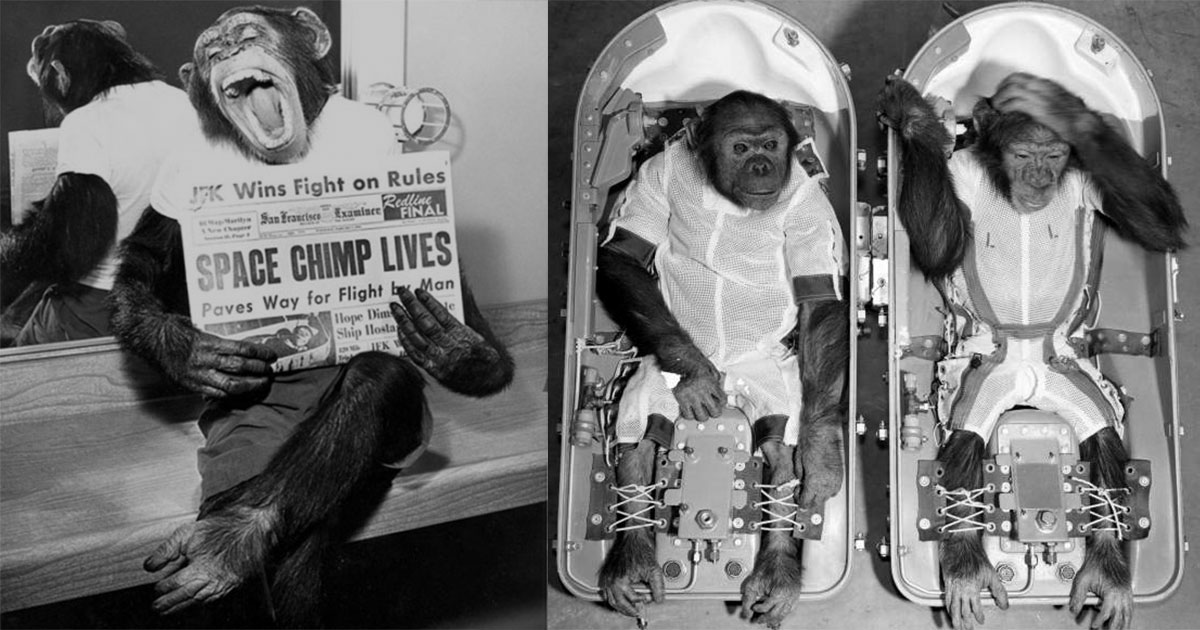
In doing so, we will consider what it might mean to enlarge the scope of "the humanities" to acknowledge the subjectivity of nonhuman animals not only in an academic context, but also for the futures of our arts, ethics, politics, economics, social relationships, and environment.
Footnotes: 03 , ZL
New MALAS Fall 2019 Seminar! Professor Drew Thomases's ALIENS AND RELIGION
ALIENS AND RELIGION

We are in the age of aliens. In literature and movies, on television and the internet, we see images of extraterrestrials everywhere--little green men, tentacled blobs, terrifying creatures with claws and fangs. Aliens fill up our imaginations, urging us to ask and wonder if we're really alone in the cosmos. But whether they're real or not--whether we're alone or not--aliens are here to stay. At least in our minds. That is especially evident in the realm of religion, where countless groups have developed systems of beliefs and practices with UFOS and aliens at the forefront. This class explores these groups, the aliens they worship, as well as the imaginaries that we, on planet earth, have created about life among the stars.

We are in the age of aliens. In literature and movies, on television and the internet, we see images of extraterrestrials everywhere--little green men, tentacled blobs, terrifying creatures with claws and fangs. Aliens fill up our imaginations, urging us to ask and wonder if we're really alone in the cosmos. But whether they're real or not--whether we're alone or not--aliens are here to stay. At least in our minds. That is especially evident in the realm of religion, where countless groups have developed systems of beliefs and practices with UFOS and aliens at the forefront. This class explores these groups, the aliens they worship, as well as the imaginaries that we, on planet earth, have created about life among the stars.

ALIENS AND RELIGION
3.0
Seminar
1600-1840
W

Wednesday, August 7, 2019
Tuesday, August 6, 2019
New Fall 2019 MALAS Seminar: New historical novel of Latin America with Professor Mario Martín Flores
Fall 2019
MALAS 600A / SPAN 755
New Historical Novel
of Latin America
Professor Jose Mario Martín Flores

-->
MALAS 600A / SPAN 755
New Historical Novel
of Latin America
Professor Jose Mario Martín Flores

We will spend our time this semester
critically interrogating the foundational moments of Latin American history throughout the
study of the new historical novels proposed:
-
The encounture between two worlds (Europe + Amerindia) in El
arpa y la sombra by A. Carpentier.
-
The Mexican colonial times in Duerme by C. Boullosa.
-
The political emancipation of Latin America from the Spanish empire in El general en su laberinto by G. García
Márquez.
-
The European interventionism in Latin America and the new 20th
century in Noticias del Imperio by
Fernando del Paso.
-
Finally, the repression estrategies of theLatin American dictatorships during
the last half of the 20th century in Cola de lagartija by Luisa Valenzuela.
The
student will apply different theoretical approaches and different
historiographic perspectives to the analysis of the novels selected.

-->
BIOGRAPHY
José
Mario Martín-Flores, Ph.D.,
University of California, Irvine
BA&
MA in Educational Administration, Guadalajara, Mexico.
MA & PHD in Spanish, University of California Irvine.
MA & PHD in Spanish, University of California Irvine.
Research interest mainly focuses on Mexican and border
cultures, Literature of Baja California, 19th century Mexican narratives,
new historical novel of Latin America. His current book addresses the Mexican novel of the last
diaspora. Author of five volumes of poetry published in Argentina, Spain,
Mexico and the US and two more collections of poetry and short stories in
print. Graduate Adviser and Faculty Leader of Spanish abroad program in Merida.
-->
Friday, July 26, 2019
Sunday, July 21, 2019
Monday, July 15, 2019
Sunday, June 30, 2019
Tuesday, June 18, 2019
Subscribe to:
Posts (Atom)