Monday, February 6, 2023

More Cultural Studies Magic Co-Sponsored by MALAS! Antonio Dikele Distefano @ SDSU --> "Black Italians and Cultural Entrepreneurship in Film, Fiction, Music and Social Media."

The European Studies Department is excited to welcome Antonio Dikele Distefano to SDSU to discuss "Black Italians and Cultural Entrepreneurship in Film, Fiction, Music and Social Media." Please share with your students and join us on tomorrow, Tuesday, February 7th from 12:30-1:45pm in Montezuma Hall (flyer attached).

Antonio Dikele Distefano is an Italian writer, producer and filmmaker of Angolan descent, author of five successful young adult novels with combined sales exceeding 500,000 copies. 
He is the co-creator of the 2021 Netflix series Zero, and the director of the 2022 Amazon Prime film Autumn Beat, both featuring young Black Italian protagonists. An inspiration to many Black Italians, he has pioneered numerous projects in publishing, television, and social media. In 2016 he founded Esse Magazine – the largest and most influential rap publication in Italy today – to showcase Black artists and performers. He owns the communication agency Cantera. With his production company he is developing films that bring Black Italian performers onto the world stage. His mission is to produce quality projects that positively portray underserved communities.

Thank you to our co-sponsors! SDSU School of Theatre, Television, and Film, SDSU Arts Alive, SDSU Africana Studies, SDSU MALAS and The Italian Institute of Culture Los Angeles. 

Kind regards, 
-- 
Veronica Gonzalez
Pronouns: she/her/hers
Administrative Support Coordinator
Dept. of European Studies
College of Arts and Letters
(619) 594-6491


click to enlarge


Monday, December 12, 2022

New MALAS Seminar, Spring 2023 with Professor Taharka Adé, AFRICAN CIVILIZATION II


AFRICAN CIVILIZATION II 
(AFRAS 521 & MALAS 600C)

Mondays + Wednesdays, 1:00-1:50 PM

Professor Taharka Adé


This course serves as an intensive investigation into the rise and fall of several major African Civilizations. Civilizations and periods will normally include the Sudanic empires of Ghana, Mali, and Songhai, as well as the histories of more modern societies such as the Yoruba, Xhosa, and Asante. Emphasis will be placed on African agency, showing the evolution of the peoples, nations, and their civilizations at different places and times within the long history of Africa.


BioDr. Taharka Adé is an Assistant Professor in the Department of Africana Studies. Adé obtained both his M.A. and Ph.D in Africology from Temple University. His research interest is primarily the development of comparative analyses between various African and African diaspora cultural phenomena. 


Friday, December 9, 2022

New Spring 2023 MALAS 585 Class Open to Juniors, Seniors, and Graduate Students! "Seminar in the Histories and Cultures of Skateboarding" with Professor David Kamper

MALAS  585 - Seminar in the Histories 
and Cultures of Skateboarding 
Mondays and Wednesdays, 3:30PM - 4:45PM in HH 146 
Professor David Kamper 

Skateboarding is one of the most popular sports/activities in the United States (and beyond) and is a billion dollar industry with millions of participants globally. What makes skateboarding unique and so worthy of study if the way it straddles the line between sports and art, with an electric improvisation of body, space, and style. Moreover, it constitutes a sub-culture, the examination of which teaches us about social interaction, fanaticism, and unwritten ethical codes and cultural values. 

This course will discuss a broad range of phenomenological questions about how skateboarders interact with space, urban built-environments, and aesthetics. It is far more than just a description or appreciation of skateboarding, but rather a course that combines critical analyses of social constructions of race, gender, and class with an advanced understanding of popular culture and how skateboarding relates to all of the above.

Friday, December 2, 2022

Cult[ural] Studies: Cars, California, Mark Dery, and the Ghost in the (Rolling) Machine Hepner Hall, 4pm, Monday December 5, 2022 Professor William Nericcio

MALAS Lecture Series - Fall 2022, A public lecture

"Cult[ural] Studies: Cars, California, Mark Dery, and the Ghost in the (Rolling) Machine"  

Hepner Hall 214, 4pm, Monday December 5, 2022  Professor William Nericcio, Director, MALAS 

 The lecture and discussion are open to the SDSU Community    

Wednesday, November 30, 2022

Tuesday, November 8, 2022

New MALAS Seminar, Spring 2023 with Professor D. J. Hopkins! Theatre and the City

Theatre and the City
Prof. D.J. Hopkins 
MALAS 600D Theatre and the City   
THEA 649 Topics in World Theatre
Tuesday 3:30PM to 6:10PM 
PSFA 358

Focusing on “theatre beyond the theatre,” this course will get students thinking outside the box, exploring new approaches and new contexts for live performance. Explorations of site-specific theatre and immersive experiences will be augmented by theories of social space, including urban space. Activities include: reading about, talking about, writing about (and occasionally making) “outside the box” theatre. Students will attend performances at the 2023 Without Walls Festival, produced by the La Jolla Playhouse. 


Dr. D.J. Hopkins (he/him) is a professor at San Diego State University. His publications focus on Shakespeare in performance and theatre in urban contexts. His current research includes immersive theatre and virtual reality. Twitter @_DJHopkins

Wednesday, November 2, 2022

MALAS Spring 2023 Seminar! Ecofascism with April Anson!

MALAS 600B Ecofascism 
HUM 580 Topics in the Humanities 
Thursday 4:00PM to 6:40PM 
AL 109 
Professor April Anson

Ecofascist rhetoric circulates in our everyday lives, using environmental ideas to justify violence, death, and other systemic harms. For example, the Covid-19 pandemic prompted analogies that "humans are a virus," but this recent example of ecofascism has a much longer history. This class will trace ecofascist rhetoric from its identification across the spectrum of modern American environmental politics, earlier origins in the Green Nazis, and nineteenth century precursors in the transnational circulation of “survival of the fittest” fantasies. Through novels, poetry, film and research, we will investigate the rhetorical imprecision of the term “ecofascism,” attend to its specific pasts, and anticipate its possible futures due to climate change, infectious disease, and police violence, among many other topics. 

Dr. April Anson is an Assistant Professor of Public Humanities at San Diego State University, core faculty for the Institute for Ethics and Public Affairs, and affiliate faculty in American Indian Studies. Her research explores the historical and ongoing connections between climate change, white supremacy, and political sovereignty—and the Indigenous environmental justice traditions that eclipse those relations. She is the co-founder of the Anti-Creep Climate Initiative, co-author of Against the Ecofascist Creep, and was a Mellon postdoctoral fellow at the University of Pennsylvania. Her research has appeared in boundary 2, Resilience, Environmental History, Western American Literature, and others. In all, she remains committed to anti-racist and anti-colonial knowledge production and social movements.

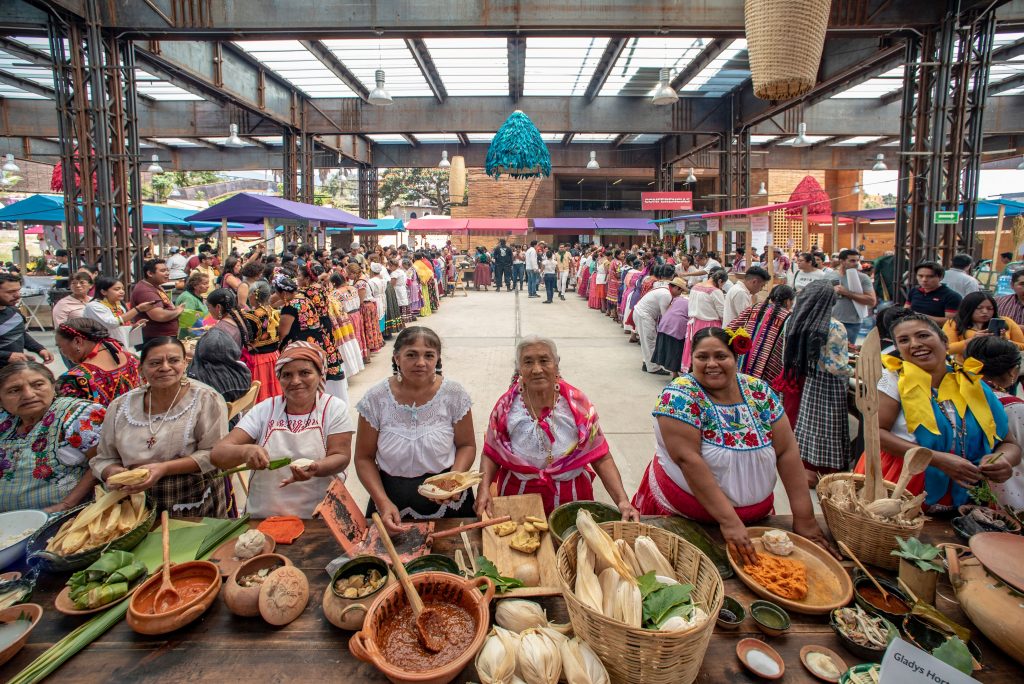
MALAS Spring 2023 Seminar: Foodways Rhetoric with Professor Consuelo Salas

Foodways Rhetorics 
Professor Consuelo Salas
MALAS 600C: Foodways Rhetoric 
RWS 596: Special Topics in Rhetoric and Writing Studies
Thursday 4:00PM to 6:40PM SH 124

Food writing has proliferated into many different genres, such as cookbooks, memoirs, and blogs; however, many disciplines have also turned their attention to the intricate network that food creates in our everyday lives. Examining a plate of food from a food studies perspective allows you to question means of production, labor and agricultural issues, as well as ideology and culture. From a rhetorical perspective, you can view the same plate of food and question the power, gender and class dynamics, and, similarly to food studies, ideology and culture. Focusing on seminal texts in both rhetorical theory and food studies and where these two disciplines intersect, this course will examine community foodways literacies and practices in the San Diego, CA area. Bringing together the two disciplines of rhetoric and food studies, this course examines foodways rhetorics.

Consuelo Salas is an Assistant Professor of Border Rhetorics. As a visual rhetorician  and a food studies scholar, her areas of interest include commodification and representations of Mexican and Mexican Americans to U.S. based audiences within “food spaces.” Her areas of interest also include foodways rhetoric, the scholarship of teaching and learning, information literacy, and the intersections of translanguaging and monolingual technological interfaces. Dr. Salas is at work on a book that critically explores images associated with the cultural imaginary of Mexico and their relationship to food and identity. Dr. Salas' co-edited collection Latin@s’ Presence in the Food Industry: Changing How We Think About Food, published with University of Arkansas Press, was awarded the Gourmand World Cookbook third best in the world in the category of Professionals in 2017. Her work can also be found in edited collections, such as Visual Imagery, Metadata, and Multimodal Literacies Across the Curriculum, Food Feminism and Rhetoric, as well as in peer reviewed journals, such as Gastronomica and the Community Literacy Journal.